Postwar peace
Pamela's WarPostwar peace marks the passage from wartime emergency into a freedom that feels unfamiliar and demanding. In the memoir, the declaration of Victory in Japan on 15 August brings the final formal end of the conflict, but it does not restore the world that existed before it. The survivors are grateful to be alive, while confronting the knowledge that the war has permanently changed their homes, work, relationships, expectations, and sense of time.
From Victory to Uneasy Peace
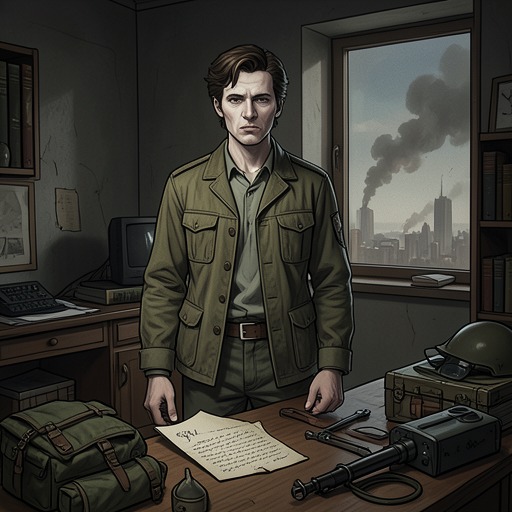
The end of the war comes after the fighting in Europe has already stopped, while the conflict in the East continues until the use of two atomic bombs forces Japan to surrender. On 15 August, Victory in Japan is declared, and the author’s twenty-first birthday follows three days later. The dates place a personal milestone beside a national turning point: adulthood has been reached within wartime, and peace arrives only after the formative years have been governed by danger, absence, and restraint.
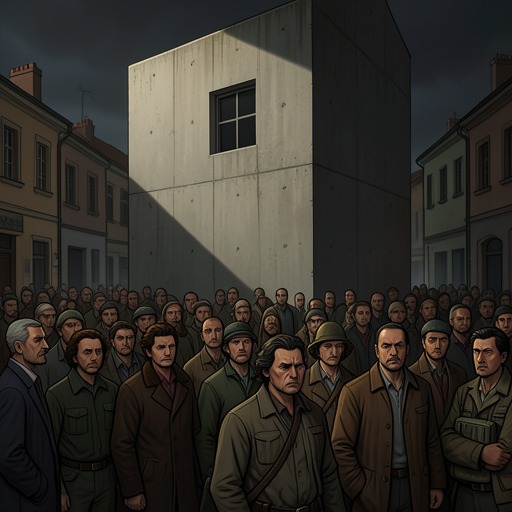
The relief is real, but it is not uncomplicated. The narrative states that everyone who has survived is fortunate, especially when set against the many who have not. Yet survival itself carries the burden of comparison. The end of the fighting cannot restore the young men lost in bombing raids, the beloved David whose death the narrator foresees with terrifying certainty, or the countless members of the original group of twenty servicemen who disappear one by one. Public victory therefore exists beside private mourning; peace begins in a society crowded with absences.
The Emotional Shock of Normality
After so long at war, peace feels odd. Misery has become familiar, and the habits created by emergency have become part of ordinary consciousness. Wartime life had supplied a powerful emotional framework: the bombing of Coventry and other cities produced shared fear and grief, while common danger also brought strangers together, encouraged practical help, and lowered the usual reserve between people. The wartime spirit offered a way to endure. Once the enemy is defeated, that organizing pressure disappears, leaving people to discover how to live without the crisis that had bound them together.
The contrast with wartime celebration is sharp. On VE-Day and during the following days and weeks, communities hold street parties with trestle tables, bunting, Union Jacks, sandwiches, trifles, jelly, cake, fireworks, and bonfires. Hoarded food is brought out to make a feast despite rationing. These ceremonies turn freedom into a shared physical experience, allowing people to eat, decorate streets, gather publicly, and express emotions that have been contained for years. But the celebrations do not reach every household equally. At John’s parents’ home, the family remains anxious because Rex has been missing for months, even though John is safe and cousin Derek and Megan are accounted for. The dreaded telegram still stands between victory and reassurance, showing that national celebration cannot cancel the uncertainty carried by individual families.
Material Hardship After the Fighting
The end of hostilities does not end deprivation. Once the euphoria passes, houses remain difficult to find and jobs are scarce. Rationing continues for years, so victory brings further shortages rather than immediate abundance. Returning troops may discover that unemployment is the reward for their service, while people who had found purpose in military or wartime work can feel rudderless once those roles disappear. The transition therefore changes the meaning of freedom: people are no longer governed by the immediate demands of war, but they must face insecurity without the same clear collective mission.
The memoir connects this national difficulty to the narrator’s own wartime trajectory. She has worked in a Birmingham aircraft-parts factory, performing a man’s job in an exclusively male unit, producing the predecessor’s output while receiving only a woman’s rate. The work is dirty, dangerous, and physically injurious, with hot swarf burning her eyes and sometimes requiring hospital treatment. Her militancy over unequal pay and possible union involvement belongs to the wartime economy, but the postwar shortage of jobs and homes suggests that the independence and purpose gained through such work will not automatically translate into secure peace. The country must absorb both the returning men and the women whose labour has sustained production.
Families, Marriages, and Altered Lives
Peace exposes the consequences of decisions made under wartime pressure. The narrator’s marriage to John is arranged at short notice because he is to be posted to Canada for further training. A special licence is required, and the couple uses a suitcase of clothes delivered to a willing local resident to create the necessary appearance of residence near St Kenelm’s Church. The wedding itself is shaped by scarcity and time: coupons are gathered for a pale blue woollen Berketex suit, while John wears his Royal Air Force uniform. Such marriages are acts of hope, but they are also products of acceleration, formed before ordinary circumstances can test the people entering them.
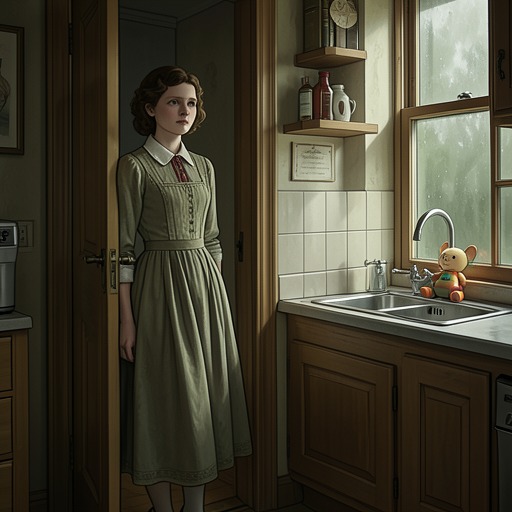
The narrator gives birth to a daughter on 10 April while she and John have no home of their own, few possessions, and she is still living with her parents. John receives a week’s leave to see them, and the family hopes that the war is nearing its end. The child’s arrival embodies continuity, but it also shows how peace begins amid provisional arrangements rather than settled domestic security. The war has reorganized housing, employment, courtship, marriage, and parenthood before the family has had the chance to establish an independent home.
The broader consequences are more severe for many others. Couples formed in haste may later regret unions made in the heat of wartime emotion. Service personnel returning from overseas can bring back experiences that have changed them beyond recognition, while partners who managed homes and made decisions alone have changed as well. Children may not recognize their fathers, and fathers may resent the child who seems to take the mother’s attention. Relationships that began during overseas postings may have no viable future, and wives may find themselves living with men who are technically familiar but emotionally altered. Postwar peace thus becomes a period of renegotiation in which the family, supposedly restored by reunion, must learn how to accommodate strangers made by war.
Survival, Captivity, and the Work of Adjustment
The end of the conflict also releases survivors from conditions that have nearly destroyed them. Geoff, Gloria’s cousin, is freed from three and a half years of captivity after Japan’s defeat. He returns alive but stick-thin and hollow-eyed, his health broken by ill treatment; the journey home takes more than two months and includes quarantine in America, and years of treatment are needed before he approaches normal health. His survival depends on a historical turn that is simultaneously liberating and catastrophic: the vast destruction caused by the atomic bombs ends the captivity that otherwise might have killed him, while many prisoners captured with him do not survive.
That contradiction prevents postwar peace from becoming a clean moral resolution. The war is over, but its costs remain embedded in bodies, homes, marriages, employment, and memory. The memoir’s final emphasis is not on effortless renewal but on the scale of adjustment required. Everyone has to learn a new rhythm after years of danger, and the country must rebuild amid shortages, disrupted families, grief, and uncertain futures. Peace is therefore both a deliverance and a problem: it ends the dreadful war, yet leaves survivors responsible for making a life from what the war has left behind.